

Ecovillage Design (ED) integrates social, cultural, ecological and economic dimensions holistically to increase resilient capacities. Through participatory processes, communities can redesign villages, towns, cities, and any human settlement. Ecovillages around the world range from indigenous or traditional villages to rural intentional communities to medium to large urban eco-neighbourhood projects.
We acknowledge and respect the Indigenous communities of Australia, and recognise they have strengths and knowledge of country in all areas of regeneration and our role in Ecovillage Transition is to undertake a reciprocal learning process and support indigenous communities to upskill and transition to be regenerative resilient communities.
Understanding what ‘ecovillage transition’ means
‘Ecovillage transition’ refers to an existing settlement or community who wants to work towards being sustainable in all areas of regeneration, social, ecology, worldview (culture), economy integrating into whole systems design.

In the ecovillage network, we have realised that communities who want to regenerate their natural environments, preserve cultural heritage, increase social resilience and improve livelihoods become powerful agents of change. We also see that there are ripple effects. Once one village is able to transition, they are able to share, exchange and teach other communities around them or who are part of their bioregion or kinship communities.
Based on past experience, we see Ecovillage Transition containing several phases that need to work hand-in-hand with each other, with the community, local organisations and government institutions and GEN as the guiding body.
Working with Jumbun Community
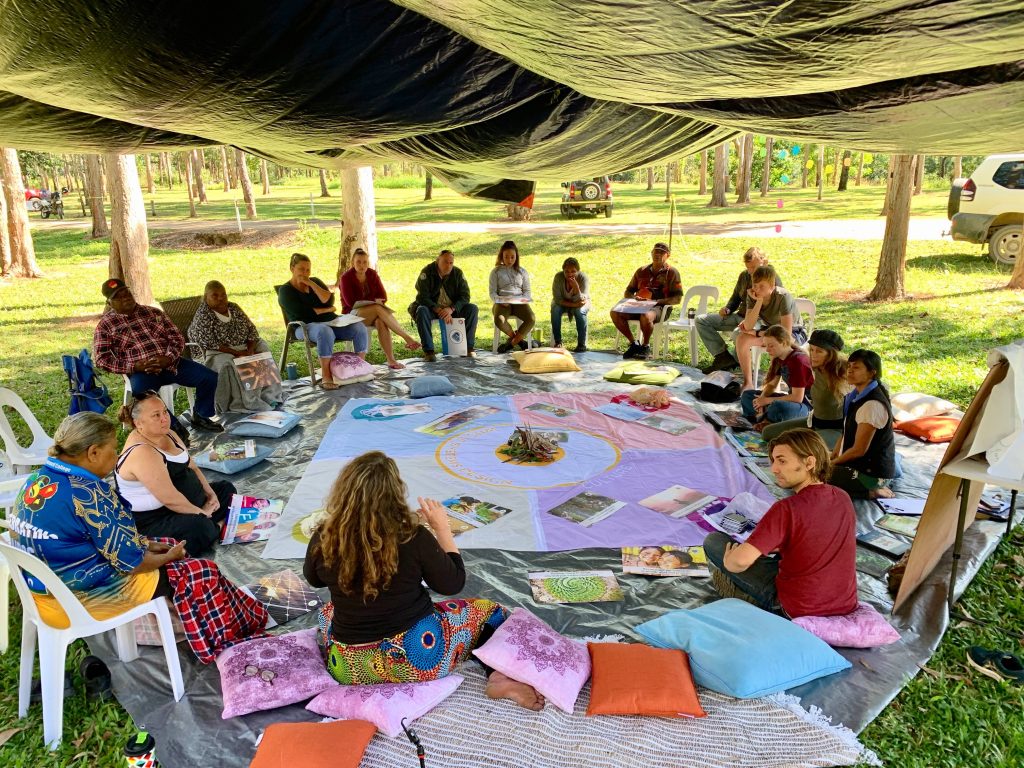
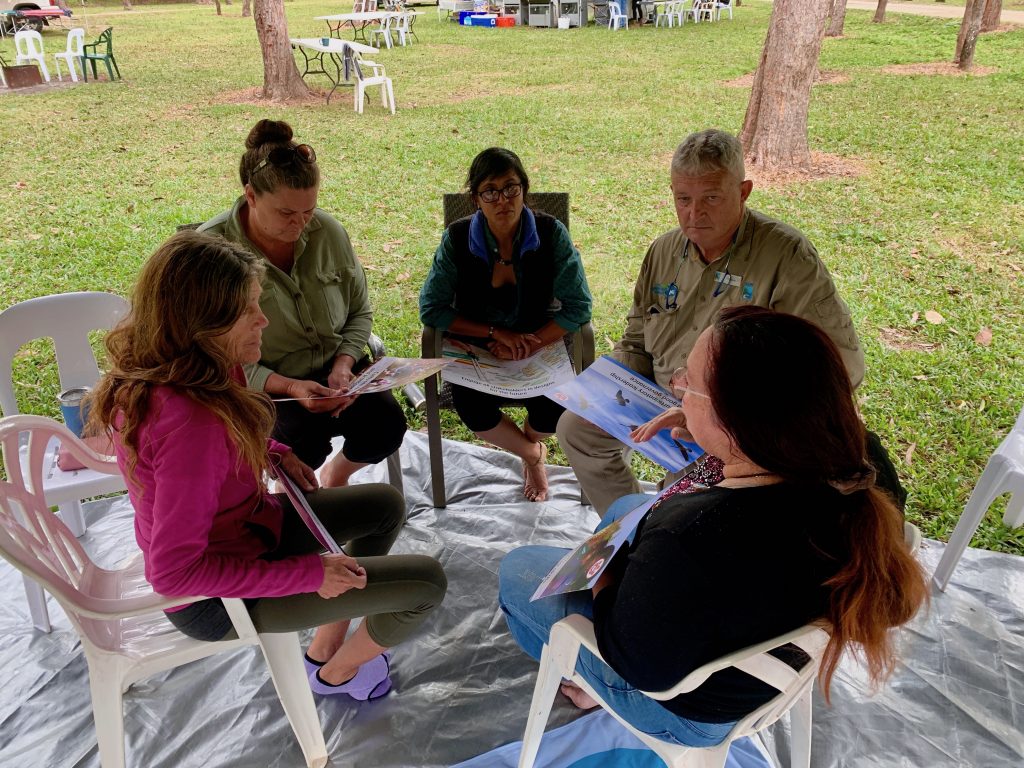
GEN Australia has been in dialogue with Jumbun community (an indigenous community in far north Queensland) since 2019 about ecovillages and ecovillage design, as two community members attended the GEN Australia Training of Trainers at Narara Ecovillage. In June 2021, a small group of GEN Australia trainers and facilitators visited Jumbun and held a 3-day ecovillage workshop for Jumbun community members, surrounding indigenous communities, stakeholders, local farmers and other individuals from Jumbun’s network.
We explored the ecovillage framework and the 32 principles of social, ecological, culture and economy, integrating into whole systems design, which helps to create pathways to transition to being a thriving community. We had space not only to learn about a design system that aligns with our Aboriginal culture and values, but also to share Jumbun’s story through the eyes of elders, to listen to each other and the current issues we are facing and how we can address them collaboratively into the future. An important aspect that became visible is that Jumbun is rich in land and culture and the possibilities to regenerate their community are vast.

About Jumbun Community
Jumbun is a small Australian indigenous community situated halfway between Cairns and Townsville. There are 25 houses with a fluctuating population of around 100 to 150 people. On purchasing the land in 1976 the vision was to build a sustainable community and provide people the opportunity to return to living on their traditional homelands. The land is just over 600 acres with Freehold title.
Jumbun is working towards becoming an eco-community that integrates social, cultural, ecological, and economic values to increase sustainability and opportunities for Jumbun community members and surrounding communities both non-indigenous and indigenous. As a community, Jumbun recognises that to move forward they need to identify ways in which they can work towards regeneration and abundance, whilst utilising their natural resources to create economic opportunities that are respectful of their land, culture and heritage. They are yearning to be in control of their future pathways, and to move away from reliance on government in order to grow their local economy, whilst retaining their cultural heritage and traditional ecological knowledge; and to create a pathway and a plan that is robust and resilient for the next generations.