
By Anne Wilson
Ongo (short for Ongoing practice) is a 12-week journey for individuals, couples, and groups to embody nonviolence in daily life — at home, at work, and in community. The course is participant-led, guided step-by-step by The Ongo Book by Catherine Cadden and Jesse Chu. Drawing on decades of teaching mindfulness, Nonviolent Communication (NVC), and nonviolent direct action across six continents, the authors created a resource to help people bring peace, compassion, and wisdom into the messiness of everyday life. As they put it:
“At the end of the day, everyone wants to know how to do it at home, at work, or in their community. We know from our own experience that it’s not easy. Life is messier outside of the workshop or retreat. Without some form of ongoing inspiration, guidance, and support for practicing peace, wisdom, and compassion, most of us default to ways of being that we don’t enjoy.”
The book offers inspiration from nonviolent leaders past and present, practical exercises, and a clear framework for companions and groups to support one another through 12 weeks of practice.
I was first introduced to NVC while living at Goolawah Land-sharing Co-operative near Crescent Head, NSW, where we formed a practice group around Marshall Rosenberg’s book and recordings. Later, my friend and mentor Wendy Haynes gave me The Ongo Book, and in 2020, just before moving to Moora Moora, a close friend and I began the 12-week journey together via phone and video calls. It became a lifeline during the pandemic — helping us connect deeply and providing a supportive framework to meet challenges with more peace and growth.
Like many others, I had found it easy to fall back into habits of judgment and control, even when using the “right words” of NVC. What made Ongo different was the mindfulness element: calming the nervous system before engaging with others, focusing on intention to connect, and building peaceful responses through daily practice. Over time, I found that peaceful communication became more natural and less effortful.
At Moora Moora, interest soon grew into a group of eight people meeting in person and online during lockdowns. To our surprise, the online sessions were just as deep and connective when everyone could see and hear each other clearly. Since then, we’ve completed the 12-week program twice more, and now continue with fortnightly sessions, weaving in related practices and addressing live issues. This ongoing practice has shifted how we meet conflict — moving us from blame and shame toward observing, naming feelings and needs, and building understanding. It’s gradual work, but it gives me hope.
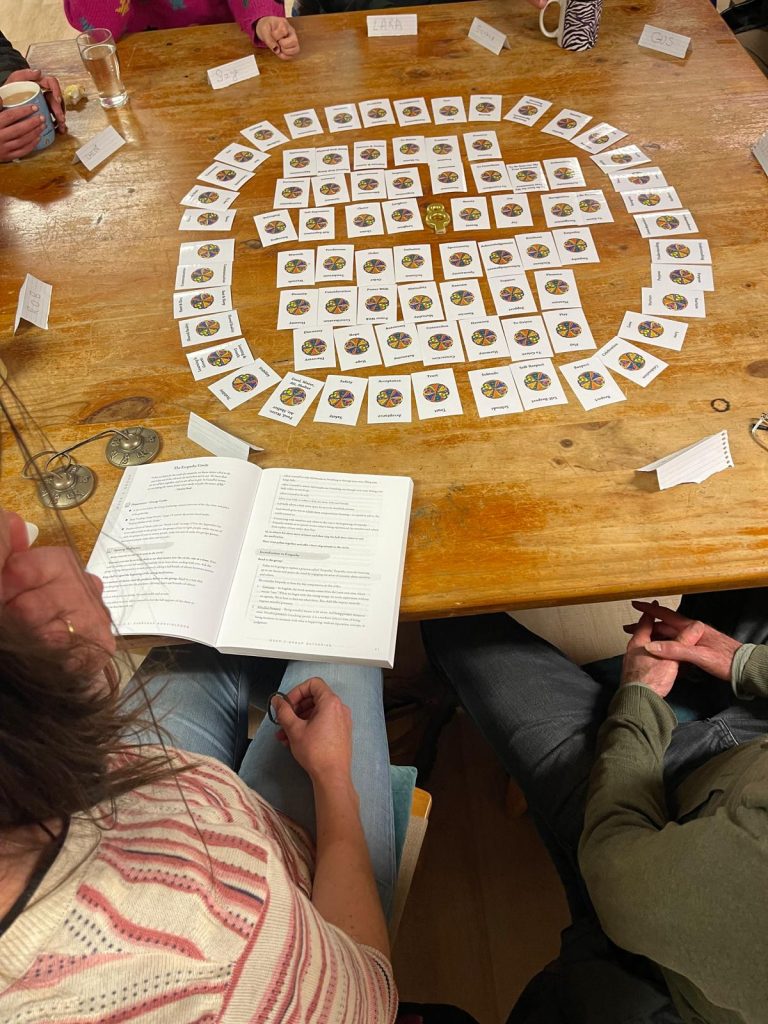
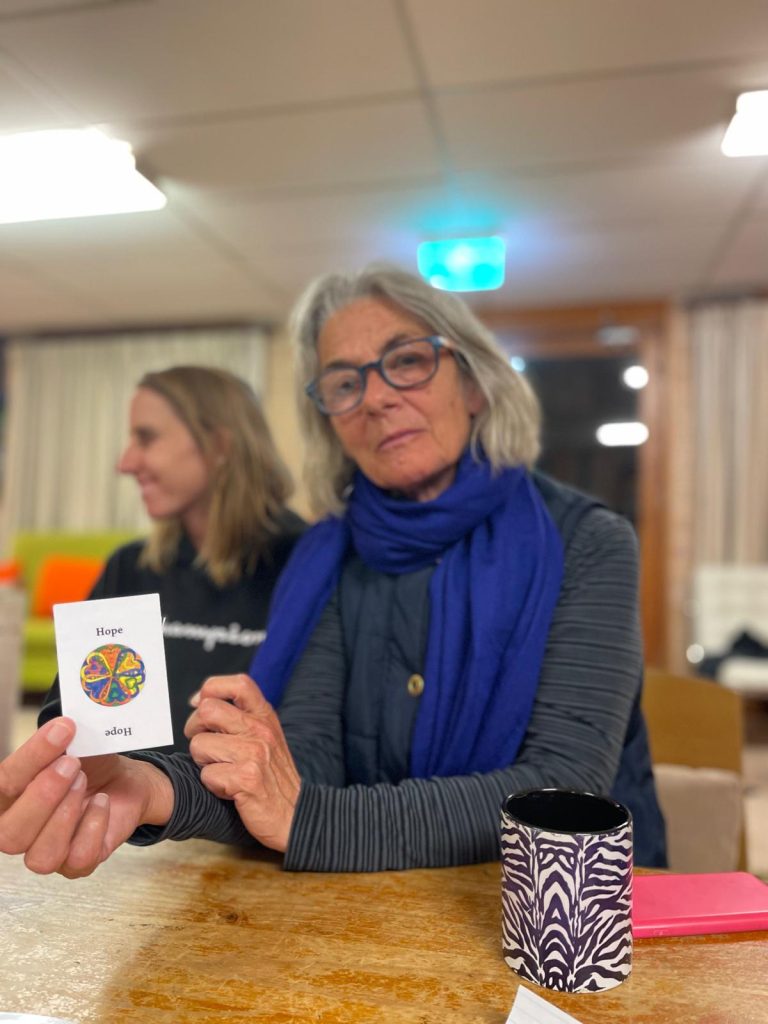
Another gift of Ongo is its accessibility: because the book is so well structured, you don’t need an expert trainer. All it takes is one person to initiate and a few others willing to join, each with a copy of the book. I shared this at the Woven Intentional Communities Conference earlier this year, where members of Narara Ecovillage became curious. When visiting friends there recently, I offered an evening workshop with an Empathy Circle, a core Ongo practice. I was touched by how quickly the group — some of whom had never met — could connect authentically and listen deeply simply by following the guidance in the book. I left heartened that Narara may soon begin their own group.
That experience has inspired me to share Ongo more widely. I’ll be running a free 3-week online introduction to Ongo in the coming months. If you’d like to take part, please reach out at [email protected]To learn more about Moora Moora https://mooramoora.org.au/